27% of Silicon Valley Tech Professionals Consider Themselves Essential
While essential workers have borne the brunt of the “new normal”, there’s an untold story for non-essential workers, especially those in tech.
On Blind, an anonymous professional network with 3.6+MM verified users, there was an influx of posts regarding COVID-19, layoffs, and other challenges tied to the pandemic.
Of those surveyed, 27% of professionals answered “I’m not considered essential or I don’t think I am, but I’m still working. My work doesn’t feel particularly important or meaningful.”
Below are key learnings from the perspective of non-essential workers:
Key Learnings as of May (~2,000 responses)
Q1: In response to the novel coronavirus, work has been divided into two categories: essential and non-essential. Which category do you fall into?
- 27% of professionals answered “I’m not considered essential or I don’t think I am, but I’m still working. My work doesn’t feel particularly important or meaningful.”
- Overall, tech professionals (33%) feel they are more essential than finance professionals (28%).
- 40% of Microsoft professionals state that “I’m not considered essential or I don’t think I am, but I’m still working and my work feels important and meaningful.”
- 32% of professionals consider themselves to be essential workers
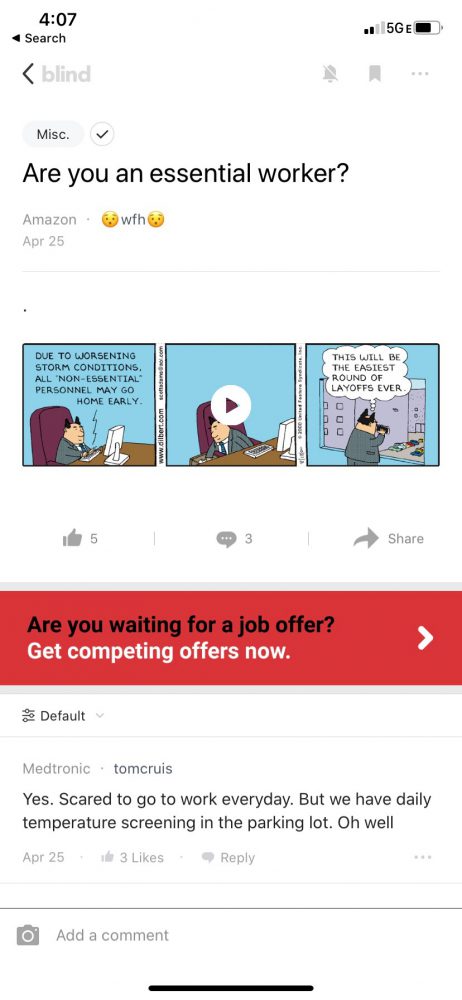
Q2: Are you concerned about your job security for the near future?
- 30% of professionals who answered “I’m not considered essential or I don’t think I am, but I’m still working. My work doesn’t feel particularly important or meaningful” are constantly worried about their job security
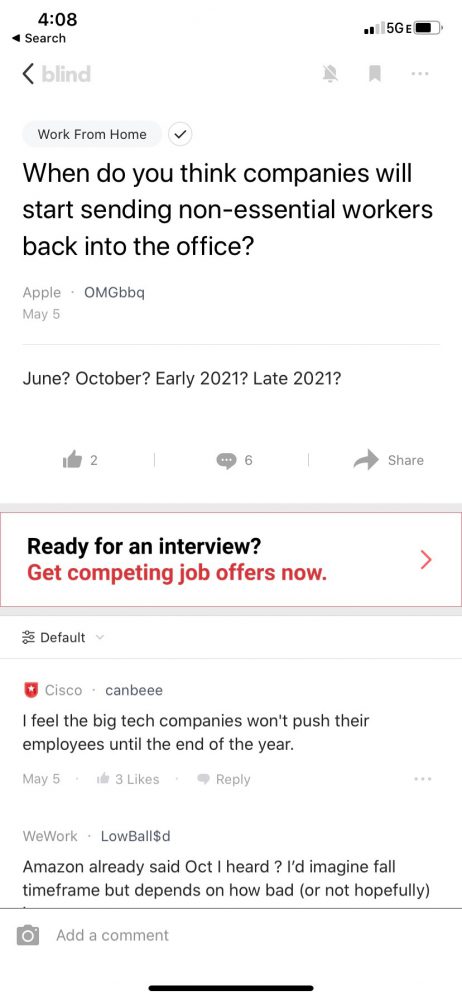
As this “new normal” continues, the fears of non-essential workers range from relevance, job security, and existential feelings.