54% of U.S. AI Workers Expect Cuts on Their Team. Engineers Feel the Safest.
Moving into AI was supposed to be the hedge, but AI/ML roles report the highest layoff fear of any function.
Blind asked 2,022 U.S. professionals how likely a layoff or significant headcount cut was on their own team in the next three to six months. Across everyone, 48% said a cut was likely, with 25% very likely and 23% somewhat likely, against 37% who said it was unlikely.
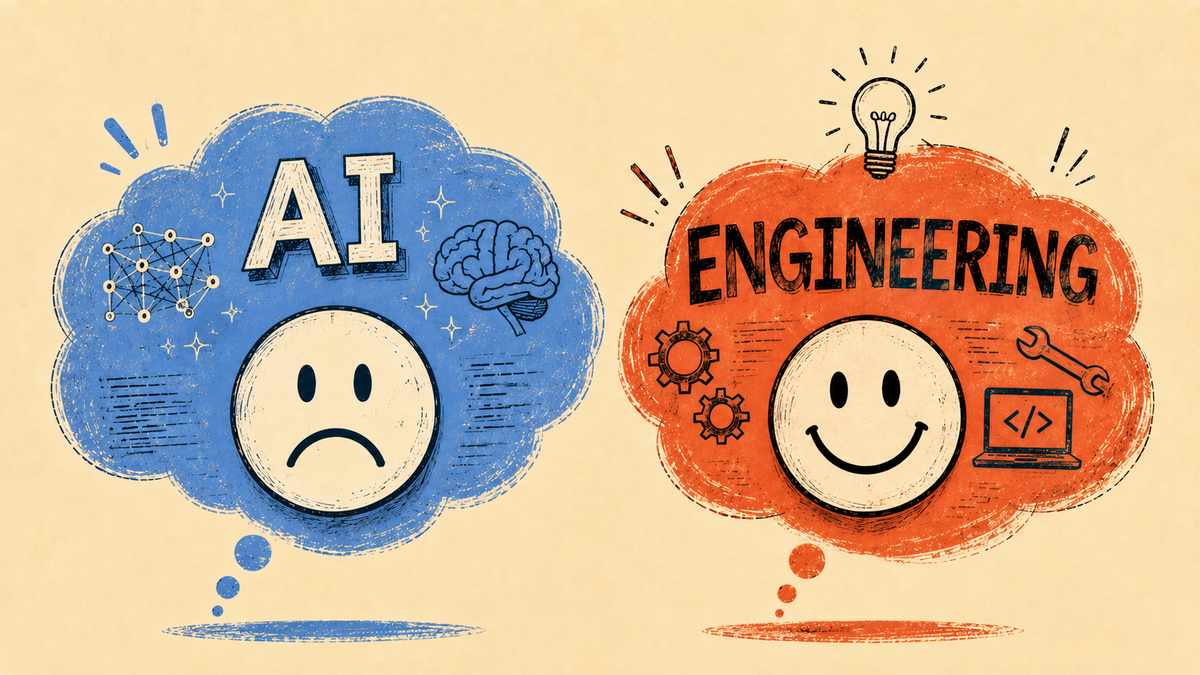
Split the answers by function, AI/ML feels the most at risk, with 54% of them saying a cut is likely, the highest of any function. The opposite of the assumption that moving into AI keeps you safe. Counter-intuitively, engineering feels the safest: Safe 45%, the only function where Safe exceeds At Risk (44%). The job AI was supposed to take first turns out to be the most stable.
The AI premium didn’t buy safety
AI/ML roles sit at the top of the risk table at 54%, and it is not a soft top. Nearly three in ten AI/ML respondents (28%) picked the strongest option, “very likely,” the highest share of any named function. Only 33% describe their team as safe, the lowest reading in the survey.
Data/Analytics is close behind at 51%. Together they form a distinct band: the two functions whose whole job is building and interpreting models are the two that most expect to be cut by the companies building and buying those models.
Engineering is the only function where “safe” wins
Engineering was the first job the automation story came for. Write the code, ship the feature, get replaced by the thing you shipped. Yet, engineers report the safest read of anyone: 45% say a cut is unlikely against 44% who say it is likely, the only function in the survey where the safe sentiment comes ahead. Their “very likely” share, 21%, ties for the lowest.
The gap between the top and the bottom of this table is ten points. It's real, but not a chasm. What separates AI/ML from engineering is less that engineers feel secure and more that everyone else has moved toward the middle. Roughly half of every function expects a cut.
The looming, stealth layoffs
Blind also asked which signal was driving people’s read on their team. "No warning signals right now" is the most common answer at 34%.
Among people who did name a signal, budget or headcount targets being cut leads at 18%, followed by projects being cancelled or deprioritized at 15% and a hiring freeze at 13%. Formal layoffs already announced comes in last at 9%. By the time a company says the word, it has stopped being the thing that scares people. The fear lives in the quiet quarter before the announcement.
Top 10 "at-risk" employers
At the company level, the ten employers whose workers report the most risk are dominated by payments and enterprise software, including Visa, PayPal, Oracle, ServiceNow, Capital One, alongside hardware and travel names, like Intel, Expedia, Lucid Motors.
Visa tops the list at 88%, with 44% calling a cut very likely. Expedia Group is the most acute reading in the survey: 86% at risk and 64% saying very likely, with just 1% describing their team as safe. PayPal, Uber and Oracle round out the top five, and all three also ranked near the top of Blind’s companion survey in India, indicating a shared global signal.
| Company | Very likely | At risk | Safe | Don’t know |
|---|---|---|---|---|
| Visa | 44% | 88% | 6% | 6% |
| Expedia Group | 64% | 86% | 1% | 13% |
| PayPal | 62% | 81% | 13% | 6% |
| Uber | 29% | 79% | 14% | 7% |
| Oracle | 54% | 75% | 5% | 20% |
| Walmart | 26% | 69% | 22% | 9% |
| Intel Corporation | 46% | 69% | 8% | 23% |
| ServiceNow | 30% | 65% | 22% | 13% |
| Lucid Motors | 50% | 64% | 22% | 14% |
| Capital One | 32% | 56% | 24% | 20% |
Top 10 “safe” employers
The other end of the table belongs to Big Tech, but the margins are thinner than the label suggests. Apple is the clearest outlier: 56% safe against 25% at risk, with only 4% calling a cut very likely — the calmest workforce in the survey by a distance. Google follows at 50% safe versus 36% at risk.
After those two, the ranking stops meaning what it looks like it means. This list is ordered by the share who feel safe, not by the absence of fear, so it still contains companies where a majority expects a cut. Cisco appears here with 45% safe but 55% at risk. Disney and Bloomberg both show 50% at risk. Salesforce lands at a dead tie, 44% on each side. Being in the safe ten doesn't necessarily mean these organizations are layoff-proof.
| Company | Safe | At risk | Very likely | Don’t know |
|---|---|---|---|---|
| Apple | 56% | 25% | 4% | 19% |
| 50% | 36% | 18% | 14% | |
| Cisco | 45% | 55% | 27% | 0% |
| Salesforce | 44% | 44% | 28% | 12% |
| Amazon | 42% | 41% | 20% | 17% |
| Netflix | 40% | 40% | 30% | 20% |
| The Walt Disney Company | 40% | 50% | 20% | 10% |
| Microsoft | 38% | 46% | 23% | 16% |
| Bloomberg | 38% | 50% | 19% | 12% |
| Intuit | 33% | 47% | 20% | 20% |
Methodology
Blind surveyed 2,022 professionals based in the U.S. between August 12 and August 23, 2026, on perceived job security across teams and functions. “At risk” combines “very likely” and “somewhat likely”; “safe” combines “unlikely” and “very unlikely.” The balance in each row answered “don’t know.” Companies with fewer than 10 responses were excluded from company-level analysis, and function comparisons exclude the “Other” category. Response breakdowns are as follows:
- Which team or function do you currently work in?
- Engineering (26%)
- AI / ML (11%)
- Product / Design (26%)
- Data / Analytics (7%)
- Sales / Marketing (10%)
- Operations / Support / G&A (9%)
- Other (11%)
- In the next 3-6 months, how likely is a layoff or significant headcount cut in your team?
- Very likely (25%)
- Somewhat likely (23%)
- Unlikely (22%)
- Very unlikely (15%)
- Don't know (15%)
- Which signal is the strongest driver of your read on your team's risk?
- Hiring freeze (13%)
- Budget or headcount targets cut (15%)
- Projects cancelled or deprioritized (11%)
- Rising PIP (18%)
- Formal layoffs already announced (9%)
- No warning signals right now (34%)