67% of Professionals Feel They “Owe” Productivity
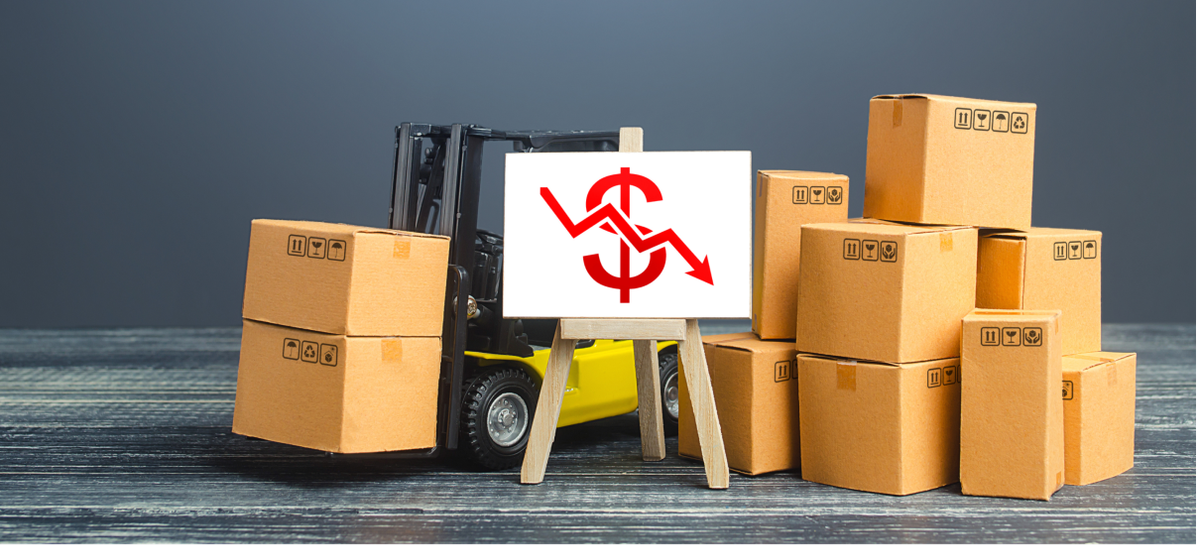
The ways we measured productivity at work had not changed much pre-pandemic, yet the conditions around work have changed significantly now. Employees have been juggling myriad responsibilities and often have additional caregiving, health, and financial concerns, and require the trust of leadership more than ever.
We see this conversation evolving on Blind, the largest anonymous professional community with 4.1M users from big tech and financial services.
A user at Microsoft posted, “We all have days where we are less productive. Something happening in our lives, medical appointments, errands, family or other social problems. We might get distracted or having a tough time focusing. Sometimes we might go down the rabbit hole on a work item or task that isn’t high value, but is personally interesting over less interesting work with higher impact.
Whenever I have those days or slumps, I end up feeling like I “owe” productivity. I have to make up for lost time or effort. So I end up working late hours or doing weekend work. Covid WFH has made this even worse, where I’ve found myself less productive, and have this feeling more often.
Do others share in this feeling?”
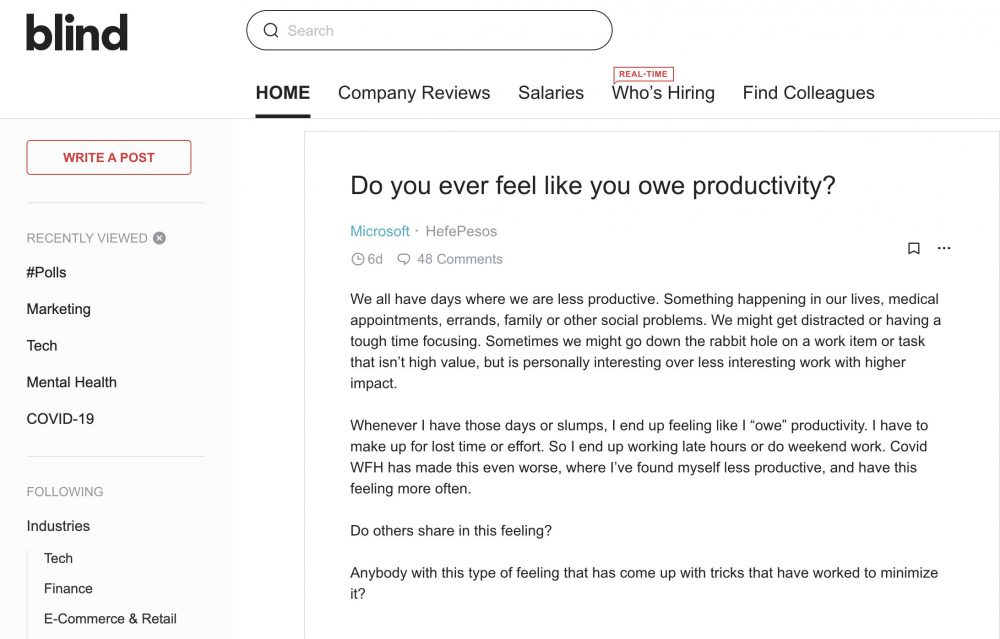
Do you ever feel like you owe productivity? Here are key learnings from over 1,000 professionals
- 45% of professionals responded, “Yes, I often feel this way, and make up for lost time”
- 22% of professionals responded “Yes, I feel this way sometimes, but also don’t feel the need to do “make up” work”
- 30% of Google professionals responded “Yes, I feel this way sometimes, but also don’t feel the need to do “make up” work”
- 12% of professionals responded “No, work life balance is too important to bother with making up for occasional lost time”
- Only 9% of professionals responded “No, I used to feel this way but have found a way to rationalize it and no longer feel this way”
- 0% of Netflix professionals responded “No, I used to feel this way but have found a way to rationalize it and no longer feel this way”
You can see the raw data here.
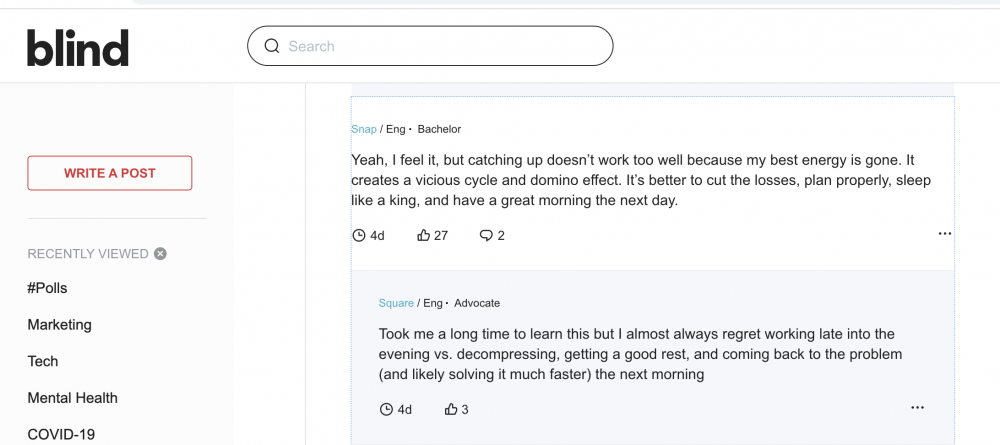
An engineer at Snap responded “Yeah, I feel it, but catching up doesn’t work too well because my best energy is gone. It creates a vicious cycle and domino effect. It’s better to cut the losses, plan properly, sleep like a king, and have a great morning the next day.”
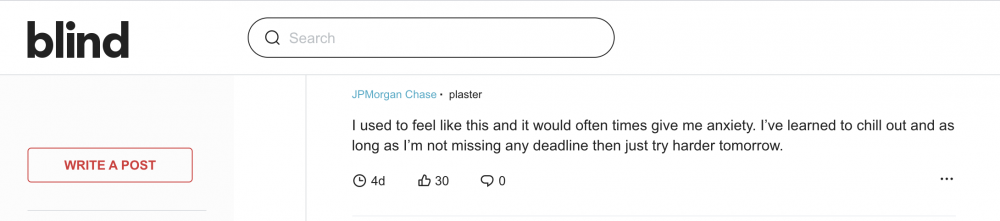
A user at JPMorgan Chase shared “I used to feel like this and it would oftentimes give me anxiety. I’ve learned to chill out and as long as I’m not missing any deadline then just try harder tomorrow.”
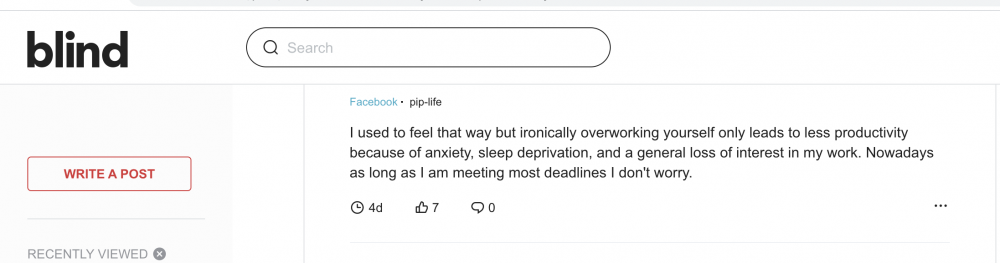
A Facebook user shared “I used to feel that way but ironically overworking yourself only leads to less productivity because of anxiety, sleep deprivation, and a general loss of interest in my work. Nowadays as long as I am meeting most deadlines I don’t worry.”
Remote work may benefit many people, but it doesn’t work for all. We have examples in our own company of employees who can’t wait to get back to the office, while others love the ability to work from home. Either way, it seems like guilt and productivity continue to haunt remote workers.