75% of Startups Aren’t Raising Capital. Here’s Why.
In today’s startup market, founders aren’t just failing to raise capital, they’re increasingly choosing not to try.
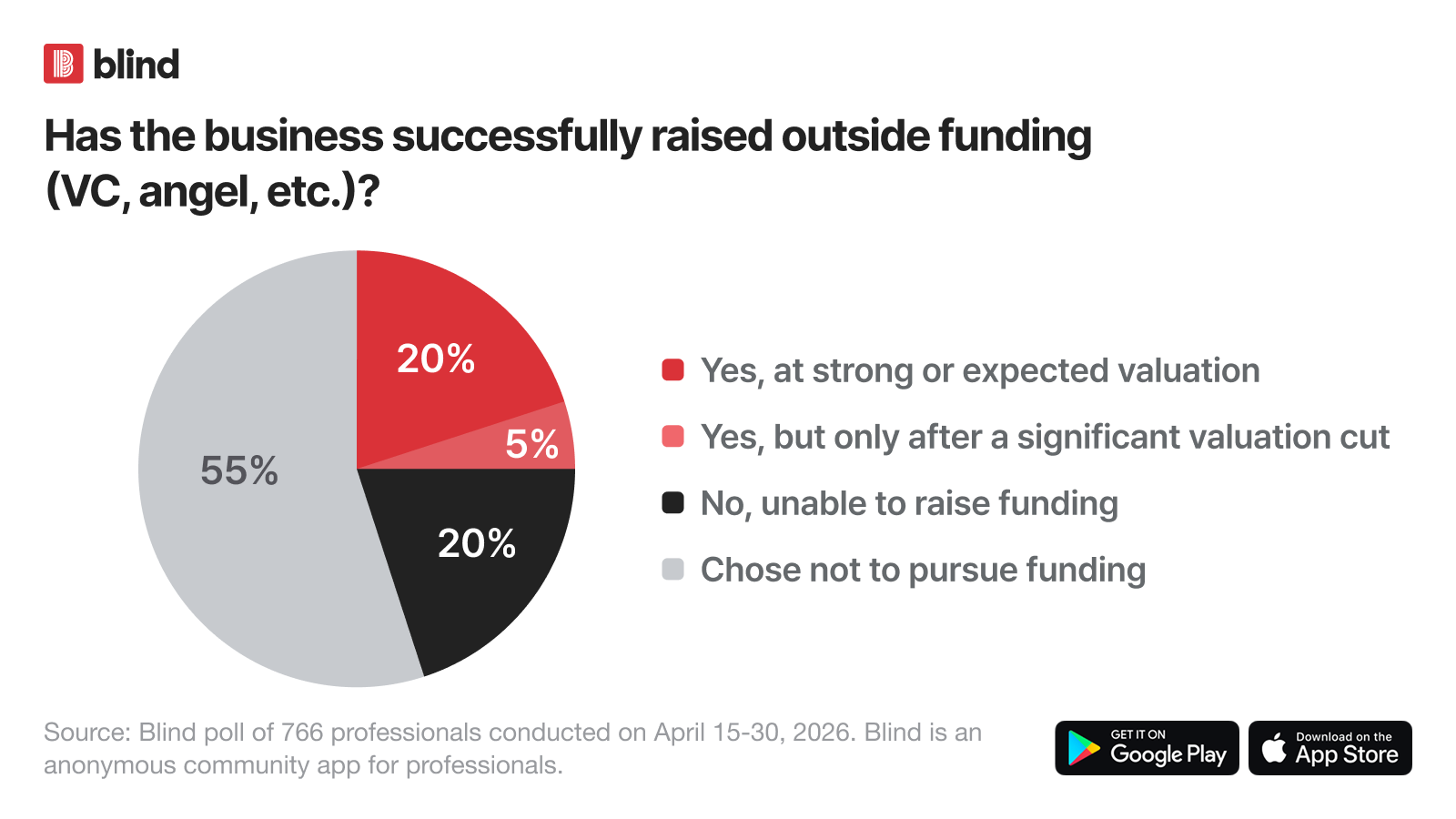
In a survey of 700+ respondents, 55% of new businesses chose not to pursue funding at all, while another 20% attempted and failed. That means 75% of startups in this sample never successfully raised outside capital.
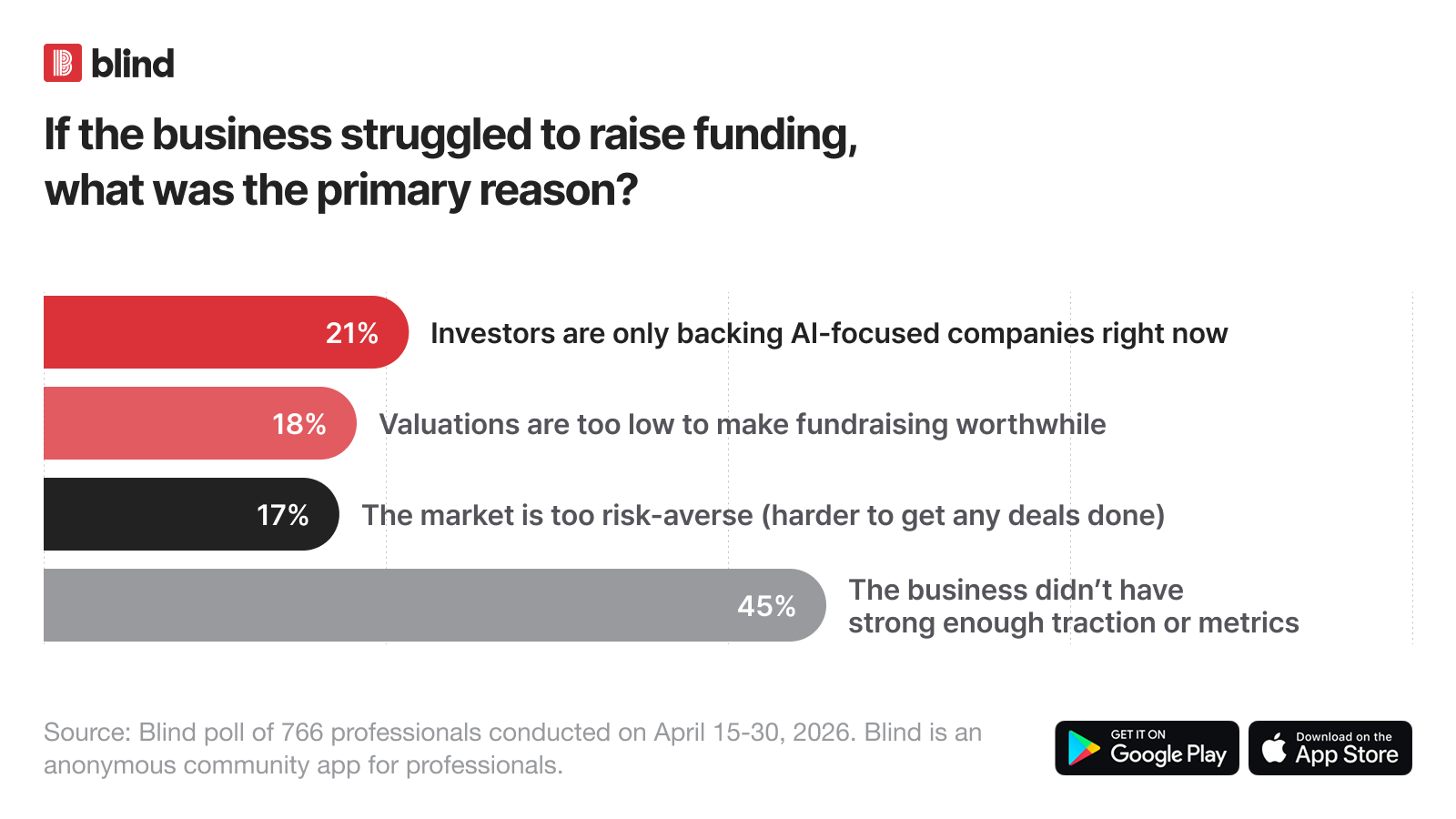
Among those who struggled to raise funding, 45% cited weak traction or insufficient metrics as the primary reason.
The Shift: From Traction to “AI or Nothing”
When founders were asked why fundraising didn’t happen, a different pattern emerged:
- 21% said investors are only backing AI-focused companies
- 18% said valuations are too low to make fundraising worthwhile
- 17% said the market is too risk-averse
In other words, more than half of respondents pointed to external market conditions, not just business performance.
A Harder Market Than Founders Expected
The broader economic backdrop isn’t helping.
Ongoing instability tied to the U.S.-Iran War has introduced volatility through rising fuel costs, disrupted supply chains, and reduced business investment. For early-stage founders, this translates into a tougher fundraising environment and fewer risk-tolerant investors.
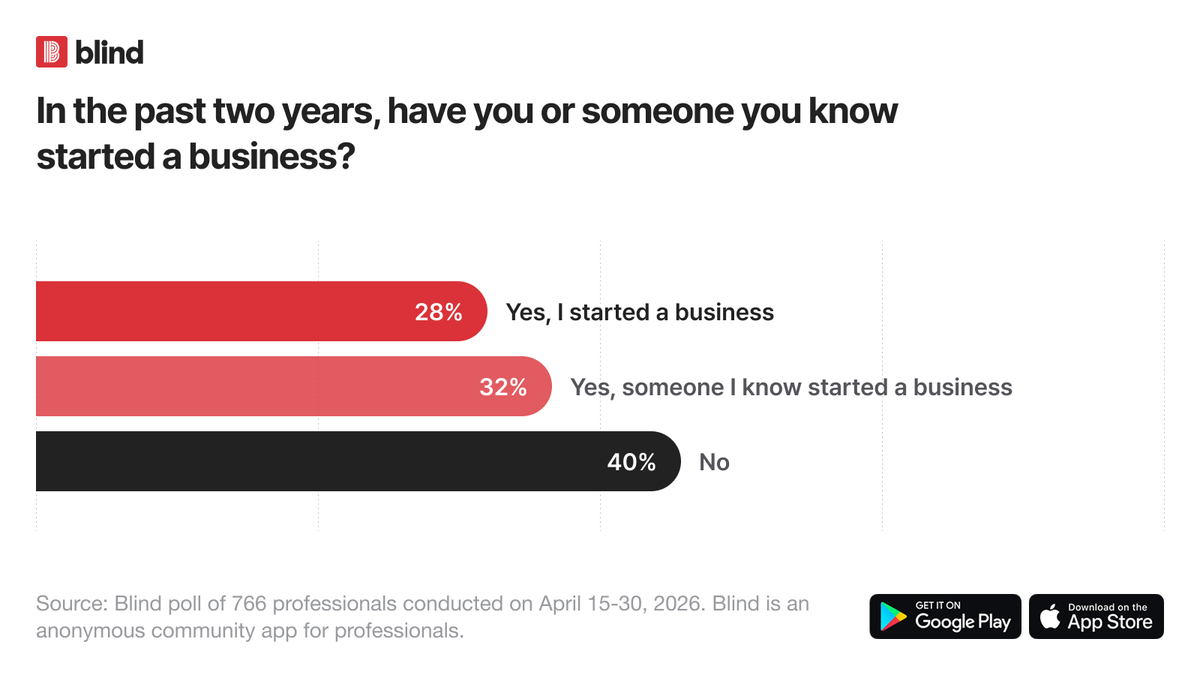
Even among those entering the startup ecosystem, (60% of respondents said they or someone they know started a business in the past two years) there’s a growing awareness that not all startups are equally fundable anymore.
Startups without AI integration, proprietary data, or breakout early traction are increasingly seen as higher risk in a market that’s already risk-averse.
Methodology
Q1: In the past two years, have you or someone you know started a business?
- Yes, I started a business (28%)
- Yes, someone I know started a business (32%)
- No (40%)
Q2: Has the business successfully raised outside funding (VC, angel, etc.)?
- Yes, at strong or expected valuation (20%)
- Yes, but only after a significant valuation cut (5%)
- No, unable to raise funding (20%)
- Chose not to pursue funding (55%)
Q3: If the business struggled to raise funding, what was the primary reason?
- Investors are only backing AI-focused companies right now (21%)
- Valuations are too low to make fundraising worthwhile (18%)
- The market is too risk-averse (harder to get any deals done) (17%)
- The business didn’t have strong enough traction or metrics (45%)