Guest Blog Post Series: ShockTalk x Team Blind
Blind is excited to introduce our new guest blog post series. As you know, Blind is a trusted community where verified professionals connect to discuss what matters most, anonymously.
Our guest bloggers range in specializations, disciplines, objectives, mission, and careers.
Through partnerships and posts, these professionals are waiving their anonymity to share real advice, provide honest perspectives, discuss company culture, in order to help you discover relevant career information. Our guest blog post series adds to our mission towards transparency in order to break down professional barriers. We hope these insights help you make empowered informed decisions, and inspire productive change in the workplace.
Have a topic you want to read about? Email us at press@teamblind.com
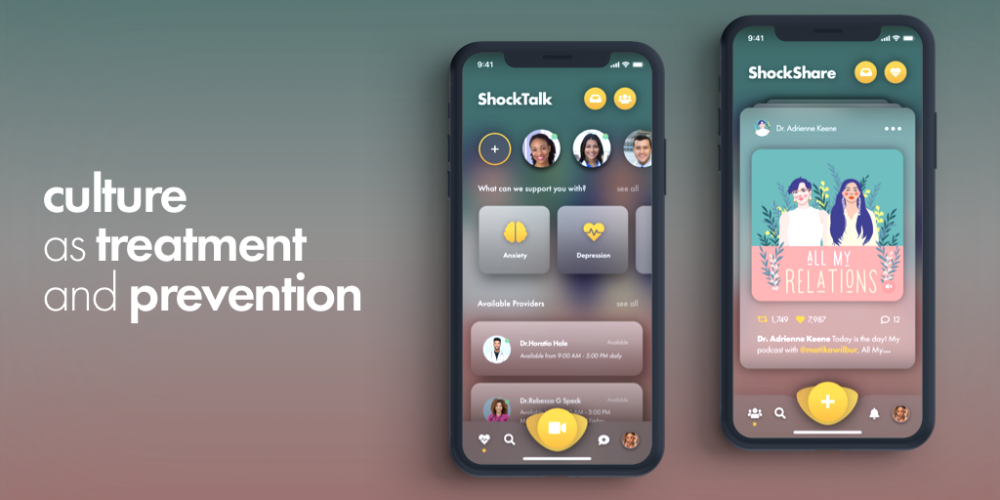
Introducing our first ever guest blog post by ShockTalk
1 – Tell us about you and your team!
Sutton King, Nāēqtaw-Pianakiw, is the Founder, President and Executive Director of UIC and the Co-Founder and COO of ShockTalk. She is Afro-Indigenous, and a descendant of the Menominee and Oneida Nations of Wisconsin. She currently resides in the Bronx, NY. Sutton holds a BA in Psychology from the College of Mount Saint Vincent and an MPH in Global Health from New York University College of Global Health. Sutton is passionate about both Indigenous research and improving Indigenous health domestically and internationally. With these passions she aims to help bridge the gap of health inequalities that exist for Indigenous people of the North, South and Central Americas. She is experienced in the management of federal grants and the development, implementation and evaluation of health programs in Native American and Alaska Native communities within rural and urban areas. In her career she led the development of the first culturally tailored training, Trauma-Informed Policing, funded by the OJJDP designed for law enforcement who engage with Tribal youth. During this time she implemented both trauma-informed and suicide prevention programs within 80+ tribes. Previously, Sutton served as the Director of Wellness for an Urban Indian Health Program servicing the largest number of Urban Natives in the country, New York City. Sutton is a consultant and has supported various universities and agencies focused on Indigenous centered projects such as University of New Mexico, College of Population, Florida State University and the United Nations Permanent Forum on Indigenous Issues. Sutton@urbanindigenouscollective.org
Austin Serio is the Director of Technology and Globalization for UIC. Austin is a member of the Chicoran Shakori nation of South Carolina. As part of the Great Migration of the 60s, some Shakori and other peoples of color walked away from sharecropping by migrating to the northeast “for the good union jobs”. Growing up as a Two-Spirit urban native in the Simsbury area of Hartford, Austin has found himself at powerful intersections between the forces of Technology and Globalization. Austin has been active in Tech since 2010-2012. During and after pursuing his degree in Technology and Globalization at NYU Gallatin, Austin continued to enhance his Product Design skills as the Chicoran Shakori Tribal Web Developer and the Lead Product Designer at Up2Code, ZED Aerospace, and Blue World Inc. While pursuing his degree at Gallatin, Austin worked for Apple at one of their HQ locations, and observed the structural changes presently roiling the global economy firsthand. Finding himself at another powerful global crossroads, Austin is currently focused on the intersections between Indigenous communities, Sustainability, and Product Design. austin@urbanindigenouscollective.org
2 – Tell us about ShockTalk!
ShockTalk seeks to decrease adverse mental health effects in Native American and Alaska Natives (NA/ANs) by developing culturally appropriate and sustainable patient-provider relationships. We connect users to Native therapists trained and experienced in cultural humility through a telebehavioral app focused on healing unresolved historical and intergenerational trauma. Our goal is to minimize out-of-pocket costs as much as possible, and so we are building ShockTalk from the ground-up with robust Medicaid support.
ShockTalk was born on Indigenous Peoples Day 2019, October 14th, but there were a few events that set the stage for its creation.
As co-founder Austin Serio became more active within the Chicoran Shakori Nation of South Carolina, he embarked on a collaborative historic, linguistic, and cultural revival research project. Dissatisfied with the slapdash collaboration patchwork of social media, google apps, messaging apps, and video chat apps Austin knew there had to be a better way. Having designed and coded many apps and websites since the age of 12, Austin’s brain began to whirl away at dismantling barriers to research, collaboration, and social connection.
Several months earlier, co-founders Austin and Sutton had met at the Native and Indigenous Students Group (NAISIG) at NYU. Co-founder Sutton was dissatisfied with the low-impact and narrow scope of the out-reach and referral service provided to Urban Natives in NYC. Furthermore, The narrow scope of these programs also reenforces colonial dynamics by systematically excluding unrecognized nations, such as the Chicoran Shakori, for which ShockTalk is named. Specifically, Shakori (Shak-o-ree) people call themselves “Shockoes” (Shoc-koes). With the right to healthcare, it was clear that current offerings were not making a meaningful impact on the Urban Native community’s needs.
Two weeks after graduating from NYU Gallatin in the Spring of 2019, Austin raced off to work on Wall Street. Standing on the escalator, he watched as financiers scuttled out of Bowling Green Station. It didn’t seem likely they knew they were on the land of an ancient Lenape village in Mannahatta. Exiting Bowling Green Station, Austin bumped into River Tarpley of the Tuscarora Nation. River also identifies as Sissipahaw and Tslagi.
From Austin’s interaction with River, it is now known some Sissipahaw remained on the Haw and Neuse Rivers alongside the Tuscarora before their migration. Had there been a social media platform which was built to connect peoples, nations, and land, such an interaction would have happened long ago.
Conversations like the ones between Austin, River, and Sutton harken back to an older tradition shared across Indian Country, the tradition of oral storytelling. Like many other nations who have faced the challenges of Settler Colonialism and land theft, the Shakori Nation and all of its respective bands have been pronounced as “extinct”, a convenient conclusion by groups whose power appears threatened by an Indigenous presence. It is within the interest of the powerful to maintain the current social structures, which are intentionally designed to prohibit the conversations that can strengthen, heal, and grow Indigenous Nations.
True disruption isn’t forcibly changing the lives of workers. True disruption is the upending of oppression.
3 – Can you walk us through your purpose, vision, and vision?
UIC envisions a world where Indigenous rights and sovereignty are acknowledged and respected, we envision consultation as protocol practiced and consent is continuously obtained. Through acknowledgment and respect, we envision a world where the gap of health inequalities no longer hold back our Urban Natives. We see a world of Urban Natives with access to culturally appropriate resources to support, heal and live healthy lives.
Urban Indigenous Collective is a sister organization of ShockTalk. Together, we share the goal of bridging the health inequities among all Natives. Due to our community experiences with historical and intergenerational trauma, we knew there was a need to be met.
4 – ShockTalk seeks to decrease adverse mental health effects in Native American and Alaska Natives by connecting users to Native therapists. Why did you choose to focus on this specific vision? How did you decide to make this your purpose?
Research indicates that NA/AN populations have disproportionately higher rates of mental health problems than the rest of the US population.The U.S. suicide rate is up 33 percent since 1999, but for Native American and Alaska Native women and men, the increase is even greater: 139 percent and 71 percent, respectively. For centuries, NA/AN communities have accumulated immeasurable amounts of historical and intergenerational trauma in the United States. The historical exposure to loss of land and life through cultural destruction, catastrophic disease, warfare and violence, coupled with ongoing experiences of poverty and discrimination has subjected native people to substantial difficulties. Historical trauma is a distinct form of trauma and essential in understanding the deleterious impact on mental health of many NA/AN populations. Historical losses due to genocide, witnessing violent events and current experiences of loss can result in symptoms of Posttraumatic Stress Disorder. Research has shown that AI/AN youth experience PTSD at a rate of 22 percent, the same rate as veterans returning from Iraq and Afghanistan, and triple the rate of the general population. Suicide is the eighth leading cause of death for Natives across all ages. For Native youth ages 10 to 24, suicide is the second leading cause of death; and the Native youth suicide rate is 2.5 times higher than the overall national average, making these rates the highest across all ethnic and racial groups. Natives are the only group within the United States born with the legal right to healthcare. This legal obligation is based on treaties in which tribal nations ceded land and natural resources for various social services including healthcare. Indian Health Service (IHS) is the federal agency tasked with providing health services to NA/AN, however, IHS is grossly underfunded and understaffed causing barriers to providing comprehensive and quality mental health services through IHS clinics, Tribally run clinics (638 contracts) and Urban Indian Health Programs (UIHsPs). Furthermore, UIHPs are only given 1-2% of IHS’s budget, which compromises the quality of mental health services available in urban areas. Barriers such as long wait times, high turnover in staff and quality of culturally tailored services have the ability to be resolved through our solution. Our app, ShockTalk, serves as a safety net for NA/AN seeking mental health services. ShockTalk has the ability to facilitate sustainable patient provider relationships through a researched algorithm and provides access in appropriate time based on mental health needs.
It’s important to understand that we, the founders, didn’t come into development with a product focus. We came into this focused on finding a solution to mitigate the crisis our communities face, and open to feedback on what that tool would look like. The customer exploration was critical in our development. We listened to understand, not to reply and in doing so we interviewed 51 native users and clinicians. Indigenous peoples
see ongoing consultation and co-creation as protocol and so we value this framework of developing solutions. Customer exploration is something we’re familiar with as it’s protocol to consult with elders and our communities before making decisions that affect our future generations. And through this process we quickly learned that we needed to pivot our initial product idea to meet the true need of our people.
5 – You mention disruption on your website. Can you walk us through the disruption?
ShockTalk is creating in both the coding and mental health space.
ShockTalk is disrupting the settler colonial power structure through the cooperative values of the Eastern Woodlands tradition. Native American and Alaska Natives are the only populations that is born with the legal right to healthcare, based on the treaties signed between the tribal nations and the federal government. The Federal government continues to willfully ignore its obligations and responsibilities to the first peoples of this nation by funding the Indian Health Service (IHS) at 50% capacity. As a result of the willful underfunding of IHS, the agency doesn’t have the resources to provide the minimum quality of care and access to services that we might expect if we go to a veterans health facility, or a Medicare or Medicaid provider. The Federal government’s willful ignorance of its responsibility to provide healthcare to the first peoples of this country is a violation of equal protection under the law — a powerful dynamic ripe for disruption.
ShockTalk leverages the power of cooperative UX design thinking to knit together a range of public health resources into one seamless experience. A key principle of UX is accessibility. When it comes to healthcare costs, accessibility is often used as elite “double-speak”. For example, in the debate on Universal Healthcare, some argue they are for “universal access”, which is nothing more than a feel-good platitude to paper over the class barrier they failed to confront. We plan to meet people where they’re at by starting with robust Medicaid support.
6 – “True disruption isn’t forcibly changing the lives of workers. True disruption is the upending of oppression.”
There is also a component of restorative justice at work within ShockTalk. As previously mentioned, the Federal government willfully ignores its treaty obligations and the NA/AN right to healthcare. It’s a specific and targeted action. By working through the Medicaid system, whose funding is more robust and protected than IHS, we are building a different avenue for Native communities to pursue their right to healthcare. Overall, ShockTalk hopes to build a diversity of partnerships with healthcare insurance payers such as IHS to sustainably bridge the funding gap and minimize out-of-pocket costs for clients.
ShockTalk will disrupt the settler colonial power structure by using code and UX design thinking to target issues of race and class equity. We already know that Tech can generate vast sums of wealth, so then the question is, what are we doing with it? So far, especially from an Indigenous perspective, the majority answer has been for that wealth to be hoarded by a very few group of people.
As the descendant of sharecroppers, wealth hoarding and inequality is something Co-Founder Austin takes serious issue with. Rather than hoarding wealth as is common, ShockTalk plans to redistribute our revenue first to our team members, to meet the needs which sustains our work. By partnering our financial growth with our sister organization, Urban Indigenous Collective, we can upend settler colonial oppression by creating need-based social impact in Indigenous communities.
7 – How can Blind users get involved?
TeamBlind users can get involved in many ways. Users can support increasing ShockTalk’s visibility by connecting with ShockTalk on our platforms on Instagram, Facebook, Twitter, and LinkedIn to stay updated on upcoming webinars and share our events with their communities. Users who are looking to support the development of ShockTalk can reach out to our Co-Founder Austin Serio (Austin@urbanindigenouscollective.org). ShockTalk’s mission is to become a tool of social impact and to make this meaningful change we are pursuing at this moment will take all of us.
8 -What is your call to action?
Our call to action is to donate to support the development of ShockTalk through donation (http://paypal.me/uicollective).
9 – Where do you see ShockTalk in 5-10 years from now?
Within the next year ShockTalk will have launched into the market existing both online and via the app store. We envision ShockTalk being implemented within the tri-state area first, which serves approximately 17 tribes. After successfully piloting within the tri-state we will begin developing a strategic plan of implementation to scale up and provide services within other states through the United States. Our goal within five to ten years is to be serving NA/AN communities within all 50 states. We will be working with tribes and insurance companies to license our product. Additionally, we are striving to secure contracts with single-payer healthcare systems such as Indian Health Service and Veterans Affairs who serve NA/AN communities to increase access to NA/AN who are currently being served by these systems. We hope to be in the hands of every NA/AN who have committed to their mental health and value culturally tailored mental health services.